
THEME: RECEIVING GOD’S WORD
15th Sunday in Ordinary Time, Year A

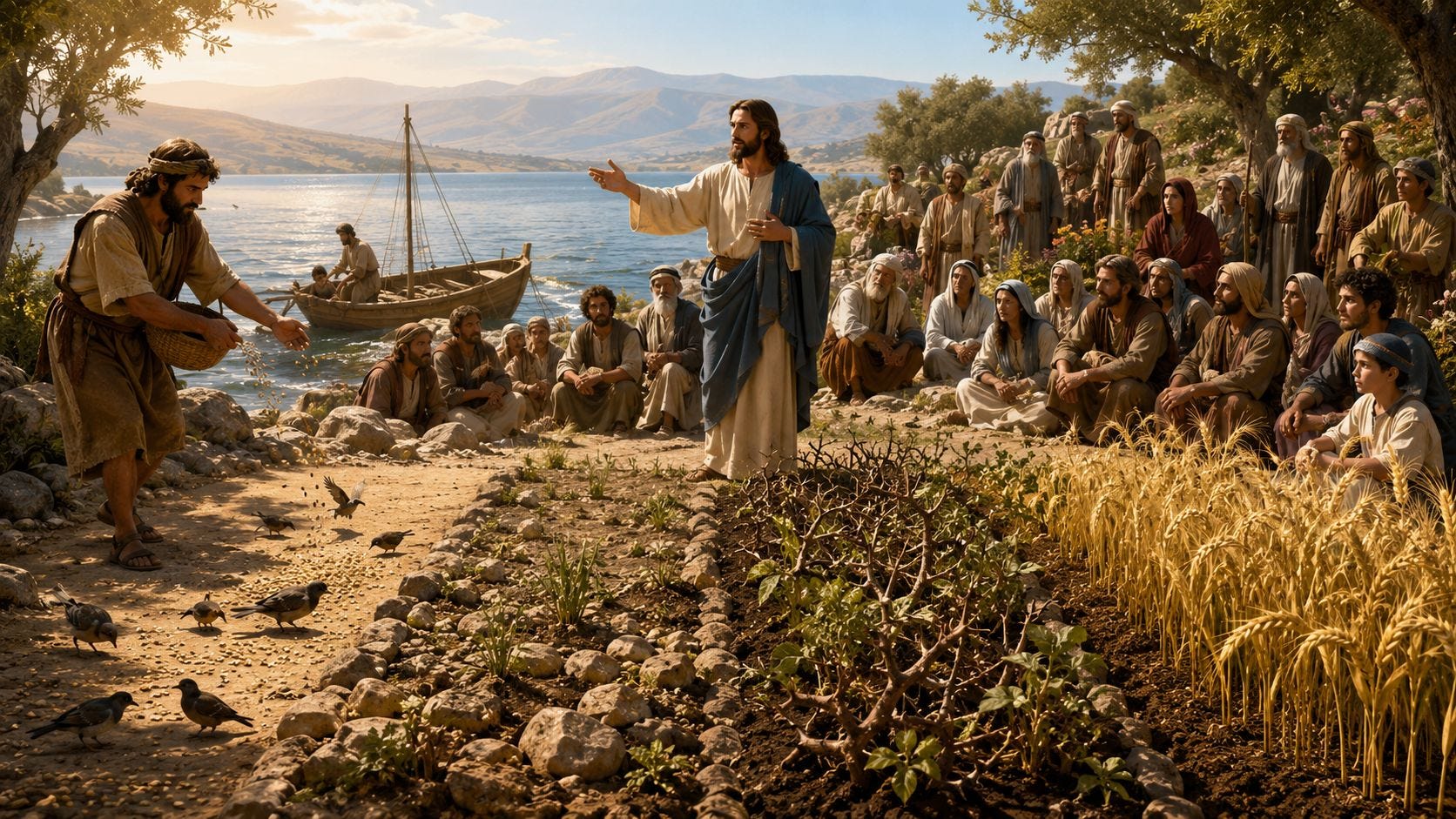
READINGS: Isaiah 55:10-11/ Romans 8:18-23/ Matthew 13:1-23
Introduction
Two people may sit side by side in the same church, listen to the same readings and the same homily, yet one may leave transformed while the other may remain unchanged. The difference is not in the power of the Word but in the condition of the heart that receives it.
Today’s readings invite us to examine ourselves honestly. What kind of soil am I? How do I receive God’s Word?
1. God’s Word accomplishes its purposes
The Prophet Isaiah gives us a beautiful image. Just as rain and snow come down from heaven and water the earth, making it fruitful and productive, “so shall my word be that goes out from my mouth; it shall not return to me empty, but it shall accomplish that which I purpose” (Isaiah 55:10-11).
God’s Word is never powerless. It created the universe. It liberated Israel from Egypt. It became flesh in Jesus Christ. It continues to convert sinners into saints today.
Whenever the Scriptures are proclaimed at Mass, God Himself speaks. Whenever we read the Bible prayerfully, Christ speaks to us. Whenever the Gospel is preached faithfully, the Holy Spirit is at work.
Often though, the divine power of God’s Word works silently and gradually, just as seeds grow beneath the soil before anyone notices.
2. Receiving God’s Word like the seed which fell on the path
In the Gospel, Jesus explains that some seed fell on the path, where birds quickly devoured it (Matthew 13:4, 19). These are those who hear God’s Word but never truly understand or welcome it. The evil one immediately snatches it away.
How often does this happen today? Some come to Mass physically but are mentally elsewhere. Mobile phones, social media, business concerns, politics, football discussions and countless distractions occupy the heart. Before the final blessing, the Gospel has already been forgotten.
The path becomes hard because it has been trampled repeatedly. Likewise, repeated sin, resentment and indifference harden the human heart.
Others harden their hearts through pride. They believe they already know everything. God’s Word cannot penetrate a heart that refuses to listen.
Let us ask God today for humble and attentive hearts that truly listen.
3. Receiving God’s Word like the seed which fell on the rocky ground
Jesus says that some seed fell on rocky ground where it sprang up quickly but withered because it had no deep roots (Matthew 13:5-6, 20-21).
These are enthusiastic Christians whose faith is based only on emotions. They are excited during retreats, conventions and revivals, but when suffering, criticism or persecution comes, they abandon Christ.
St. Paul reminds us in today’s second reading that “the sufferings of this present time are not worth comparing with the glory about to be revealed” (Romans 8:18). Christian life includes trials. Faith that cannot survive suffering is not deeply rooted.
Many people stop praying when God does not answer immediately. Some stop attending Mass after losing a job, failing an examination, experiencing illness or losing a loved one. Others leave the Church because someone offended them.
Deep roots are formed through daily prayer, regular reading of Scripture, frequent reception of the Sacraments, Eucharistic Adoration and perseverance in difficult times.
A tree with deep roots survives storms. A Christian with deep faith survives life’s trials.
4. Receiving God’s Word like the seed which fell among thorns
Jesus tells us that the thorns represent “the cares of the world and the lure of wealth” which choke God’s Word (Matthew 13:7, 22).
This warning is especially relevant today. Many people begin their Christian journey sincerely but gradually become consumed by money, career advancement, business success, political ambition and material comfort. None of these is evil in itself, but when they become more important than God, they choke spiritual growth.
Today, some sacrifice Sunday Mass for business. Others compromise honesty for financial gain. Corruption, examination malpractice, internet fraud, bribery and unethical business practices often begin when the desire for wealth replaces the desire for holiness.
Jesus does not condemn wealth; He condemns allowing wealth to possess our hearts.
The thorns also include anxiety. Many worry constantly about tomorrow instead of trusting God’s providence. Anxiety consumes the energy that should be directed towards faith.
God’s Word cannot flourish where greed and anxiety dominate the heart.
5. Receiving God’s Word like the seed which fell on the good soil
Jesus speaks of the good soil. These are those who hear God’s Word, understand it and live it. They bear fruit, some thirtyfold, some sixtyfold and some a hundredfold (Matthew 13:8, 23). The good soil is an attentive, humble, prayerful and obedient heart.
The fruit of God’s Word is seen in love, peace, forgiveness, generosity, patience, purity, justice, hope, etc. So, when God’s Word takes root, families become places of forgiveness instead of conflict. Marriages become stronger. Young people choose integrity over corruption. Public servants become honest. Business leaders become just. Priests become holy shepherds. Society itself begins to change.
The seed has extraordinary potential. A tiny seed can produce an abundant harvest. Likewise, one Scripture verse believed and obeyed can transform an entire life.
Conclusion
Beloved in Christ, every time we read or listen to Scriptures or sound homilies, God sows His Word into our hearts. The question is not whether God is speaking. He is. The question is whether we are truly listening:
Am I the hardened path?
Am I the rocky ground?
Am I surrounded by the thorns of worldly worries? Or
Am I becoming good soil where God’s Word can bear abundant fruit?
Finally, let us pray in the following manner before reading or listening to Scriptures:
Lord Jesus, remove every hardness from our hearts. Pull out every thorn of sin and anxiety. Deepen our roots in faith during times of suffering. Make our hearts good soil, so that Your Word may bear abundant fruit in our lives, our families, our Church and our nation. Amen.
By Most Rev. John Kobina Louis